Businesses today collect and analyze massive troves of data, so much so that Big Data becomes an imperative asset. However, much data is prone to redundancy, duplication, and inaccuracy; “clean” data is still in high demand. Furthermore, even less of this wealth of information is immediately actionable. Nevertheless, data analytics offer invaluable, tangible figures against which success can be measured. It may thus be equally useful to consider how data analytics can improve decision-making across the board.
As a starting point, it is vital to distinguish among the different types of data analytics available. All such data analytics can improve decision-making, but each does so in a distinct way.
Descriptive analytics mostly seek to describe metrics, measures, and events, as the name implies. It is arguably the most common type of analytics, as it offers a broad overview of real-time performance. It often also encapsulates historical data to derive meaningful, actionable data.
Diagnostic analytics seek to diagnose perceived issues instead. Such tools offer drill-down capabilities that help companies assess the exact problem at hand, identifying its root cause. They are less broad than descriptive analytics and more hyper-focused by definition, but they can also offer accurate, actionable insight.
While descriptive and diagnostic analytics delve into the present and past, predictive analytics intend to grasp the future. As such, they juxtapose historical data and customer trends with emerging external factors and dictate probabilities. This accurate, albeit not infallible, predictive capability can allow companies to make informed, proactive decisions.
On a similar philosophy to predictive analytics, prescriptive analytics intend to pinpoint the best course of action. Through cooperation with AI, Big Data, and other technologies, prescriptive analytics can gauge different potential outcomes. In turn, this mathematical prescription of optimal routes can enhance decision-making.

Data analytics can pave the way to success through valuable insights.
Real-life examples of how data analytics can improve decision-making abound. Perhaps the simplest example of this in civilian life is traffic applications, which provide traffic forecasts and help identify optimal routes. In business terms, however, there are many notable examples, such as the two below.
CRM software is the single largest software market today, in no small part due to its analytical capabilities. It provides a staggering amount of data on customer interactions, which can then be used to inform decisions. Companies can harvest such data and use it to inform decisions on the following, among others:
Finally, analytical CRM specifically offers predictive modeling functions. It produces sales forecasts based on demographics, customer behavior and patterns, regional, religious, educational, and other identifying factors, as well as external factors such as the weather. These invaluable insights can offer a tremendous asset toward success.
WordPress is the largest Content Management System (CMS) today and powers many of the most successful websites across the web. In fact, it is so prominent that it gave rise to such services as wpfullcare.com, specifically dedicated to providing WordPress maintenance and optimization. Still, it remains a user-friendly system that comes with a plethora of analytics tools.
Perhaps most notably, various plugins offer Google Analytics and similar insights tools. At the same time, Yoast SEO provides real-time SEO analytics against which to measure content. These two tools exemplify how data analytics can improve decision-making, be they traffic and visitor behavior insights to optimize one’s website or SEO guidelines to refine one’s content.
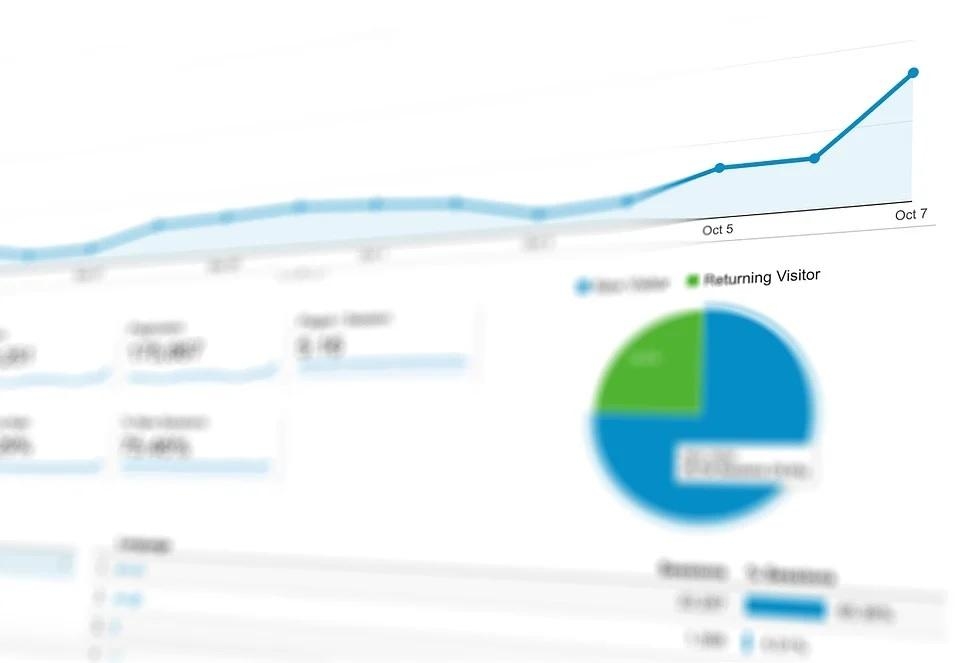
Traffic analytics can let one optimize lead generation and visitor retention strategies.
Finally, one should consolidate the exact ways in which data analytics can improve decision-making into three key spearheads. All three relate to the factors and capabilities mentioned above, elevating data into actionable insights.
Whether it’s analytical CRMs’ predictive modeling, Google’s Analytics’ descriptive overview, or any other analytics asset, data can identify patterns. Behavioral patterns are indeed highly predictable and can inform decisions across the board. Research has attested to this, proving how customer data can drastically improve sales.
In this regard, consider the following applications.
Many platforms can provide such functionalities, which allow data analytics to improve decision-making. Accurate customer segmentation and sales forecasts can help personalize marketing efforts, improve one’s sales funnel, and proactively adjust sales strategies.
The customer experience is equally valuable in that it directly improves satisfaction and drives sales. Improving customer experience through actionable data analytics can foster brand loyalty, increase referral traffic, and ensure better customer retention rates.
As highlighted above, data analytics can drive performance in ways both subtle and direct. On the front of performance across the board, consider the following applications.
Through deep insights into company activities, whether daily, weekly, or monthly, one can optimize and streamline one’s workflow. Employee performance and reports can allow team managers and administrators to gauge performance, reduce ill-invested time in redundant activities, and ultimately improve time management. Such endeavors can, in turn, improve productivity, as employees become more efficient and are presented with tangible short-term goals.
By the same token, analytics teams can use data points to evaluate historical, present, and predicted performance. Thus, they can gauge cost efficiency, determine the optimal routes for individual departments, and deduce optimal return on investment (ROI). Lastly, they can even analyze competitors’ data to determine ideal pricing points and drive performance.

Ensuring cost-efficiency and streamlining one’s workflow can both drive performance and inform decisions.
Finally, on the subject of ROI, predictive analytics can provide an invaluable tool to assist with mitigating risk. Consider many of the aforementioned factors, as well as others:
By providing insights on the above, data analytics can improve decision-making in terms of mitigating risk. Through establishing clear metrics against which to measure risk, companies can use analytics to make informed, productive, and safer choices across the board.
It should thus be apparent that data analytics can inform decisions and drive performance. From risk assessment to sales forecasts, analytics can provide a plethora of actionable insights that can help businesses thrive.
