EducationSoftwareStrategy.com
StrategyCommunity

Knowledge Base

Product

Community

Knowledge Base

TopicsBrowse ArticlesDeveloper Zone

Product

Download SoftwareProduct DocumentationSecurity Hub

Education

Tutorial VideosSolution GalleryEducation courses

Community

GuidelinesGrandmastersEvents
x_social-icon_white.svglinkedin_social-icon_white.svg
Strategy logoCommunity

© Strategy Inc. All Rights Reserved.

LegalTerms of UsePrivacy Policy
  1. Home
  2. Topics

KB15485: What does the ‘Reload Table Values’ button do in the Warehouse Catalog Show Sample Data window in MicroStrategy Developer?


Stefan Zepeda

Salesforce Solutions Architect • Strategy


The 'Reload Table Values' button refreshes the data displayed in the 'Values' window, just as the 'Refresh' button works in a Web browser.

Question:
What does the 'Reload Table Values' button do in Strategy Developer?
Answer:
The 'Reload Table Values' button refreshes the data displayed in the 'Values' window, just as the 'Refresh' button works in a Web browser. To access it, follow the steps below:
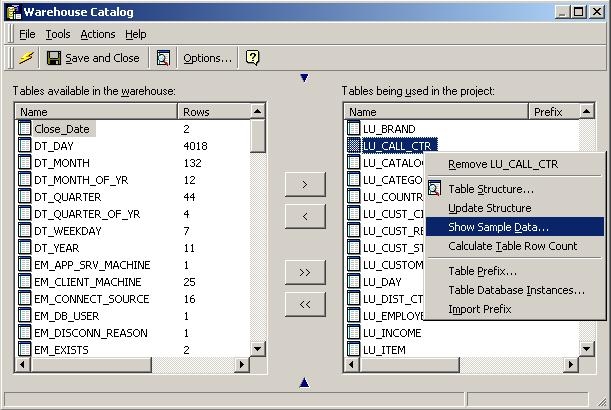
  • Open up Warehouse Catalog from the Schema menu.
  • Right-click on a table and select 'Show Sample Data' as shown below:
ka02R000000kbuNQAQ_0EM440000002FHq.jpeg
ka02R000000kbuNQAQ_0EM440000002O1g.png
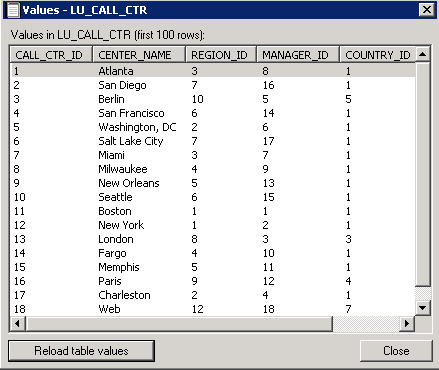
  • Click the 'Reload table values' button.

The 'Reload Table Values' button causes Strategy to run the same SQL used to populate the window when the user selected 'Show Sample Data.' The actions Strategy performs are:

  • Selects the first 100 rows from the table.
  • Checks the table permissions.
  • Checks table dependencies.

The first 100 rows of the selected table are then displayed on screen in a window titled 'Values - <Table Name>'. If changes have been made to the source warehouse table since the 'Show Sample Data' window was opened, those changes will be visible upon clicking the reload table values button. This behavior is akin to the 'Refresh' button in a web browser. Clicking the 'Refresh' button forces the browser to go back to the source and obtain the page again, showing any changes since the time the page was first loaded.


Comment

0 comments

Details

Knowledge Article

Published:

June 6, 2017

Last Updated:

June 6, 2017