SYMPTOM
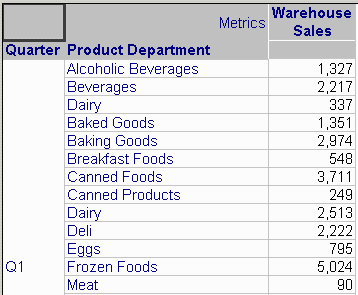
One or more multidimensional cubes are imported from a Microsoft Analysis Services data source into Strategy. Reports are created, and the reports function as expected initially, as shown below:
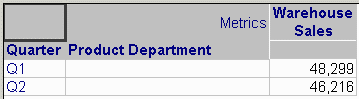
Sometime later, some of the cube objects are renamed within Microsoft Analysis Services, and the cube structure is updated in the OLAP Cube Catalog in Strategy Developer. Following the structure update, reports using the renamed objects no longer function correctly. In place of the expected results, empty values appear, as shown below:
CAUSE
This behavior is the result of the fact that Microsoft Analysis Services identifies cube objects only by name.
Strategy objects in the Metadata have a Globally Unique Identifier (GUID) that remains the same for the lifetime of the object. If a Strategy attribute, metric or report is renamed, the GUID does not change and object dependencies remain intact.
When Strategy queries a Microsoft Analysis Services data source, the 'unique name' that is returned is based on the object name. For example, the Product Department level of the Product hierarchy in one of the Microsoft Analysis Services sample cubes is described in XML as follows:
<row>
<CATALOG_NAME>FoodMart 2000</CATALOG_NAME>
<CUBE_NAME>Sales</CUBE_NAME>
<DIMENSION_UNIQUE_NAME></DIMENSION_UNIQUE_NAME>
<HIERARCHY_UNIQUE_NAME></HIERARCHY_UNIQUE_NAME>
<LEVEL_NAME>Product Department</LEVEL_NAME>
<LEVEL_UNIQUE_NAME>.</LEVEL_UNIQUE_NAME>
<LEVEL_CAPTION>Product Department</LEVEL_CAPTION>
<LEVEL_NUMBER>2</LEVEL_NUMBER>
<LEVEL_CARDINALITY>25</LEVEL_CARDINALITY>
<LEVEL_TYPE>0</LEVEL_TYPE>
<CUSTOM_ROLLUP_SETTINGS>0</CUSTOM_ROLLUP_SETTINGS>
<LEVEL_UNIQUE_SETTINGS>0</LEVEL_UNIQUE_SETTINGS>
<LEVEL_IS_VISIBLE>true</LEVEL_IS_VISIBLE>
<LEVEL_ORDERING_PROPERTY>Name</LEVEL_ORDERING_PROPERTY>
<LEVEL_DBTYPE>130</LEVEL_DBTYPE>
<LEVEL_NAME_SQL_COLUMN_NAME>Product:Product Department!NAME</LEVEL_NAME_SQL_COLUMN_NAME>
<LEVEL_KEY_SQL_COLUMN_NAME>Product:Product Department!KEY</LEVEL_KEY_SQL_COLUMN_NAME>
<LEVEL_UNIQUE_NAME_SQL_COLUMN_NAME>Product:Product Department!UNIQUE_NAME</LEVEL_UNIQUE_NAME_SQL_COLUMN_NAME>
</row>
The LEVEL_UNIQUE_NAME is the only way Strategy can match an existing object in the metadata to an object in the data source while updating structure. Since the unique name changes when the source object is renamed, to Strategy it appears that the original imported object no longer exists in the data source. The normal update behavior for objects that have been removed from the cube data source is to delete them from the Strategy Metadata. At the same time, an unrecognized unique name appears, indicating a new object to be imported.
After updating the cube structure, then, the originally imported attribute or metric no longer exists in the cube schema in the Strategy Metadata, and it is replaced with a new object.
ACTION
At present, no workaround exists for this situation. The affected reports must be edited and the offending objects replaced with the newly imported cube objects.
Because Microsoft Analysis Services does not report a consistent unique name for renamed objects, Strategy cannot determine reliably whether a renamed object is a familiar object under a new name, or an entirely new object.
For this reason, it is strongly recommended that users of Microsoft Analysis Services avoid renaming cube objects within Analysis Services as much as possible.
