SYMPTOM:
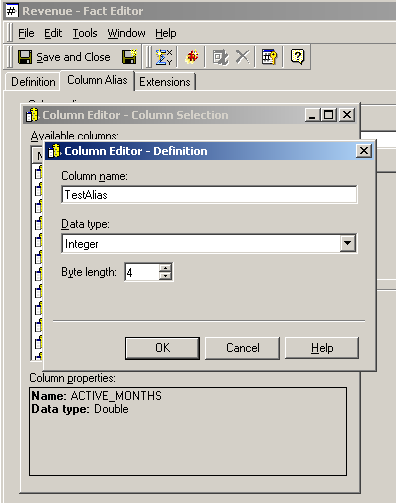
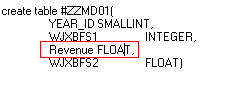
Changing the data type in the column alias of a fact has no effect in the column generated for a metric using that fact. The data type for the column defaults to float instead.
The report SQL however shows a different data type
CAUSE:
This is working as designed, a metric will not take by default the data type defined in the column alias of the fact as this can lead to incorrect results. Metrics perform aggregation and are intended for mathematical operations, Strategy will take into consideration the type of aggregation function used in the metric definition and will decide which column data type is the best fit for the metric. For example, metrics using the aggregation function sum will default to FLOAT, while metrics using the aggregation function MAX will default to the fact column alias data type. This statement is only valid when the VLDB property "Table creation type" is set to "Explicit Table", if implicit table is selected the decision on what data type to use for the intermediate tables will be taken by the database.
ACTION:
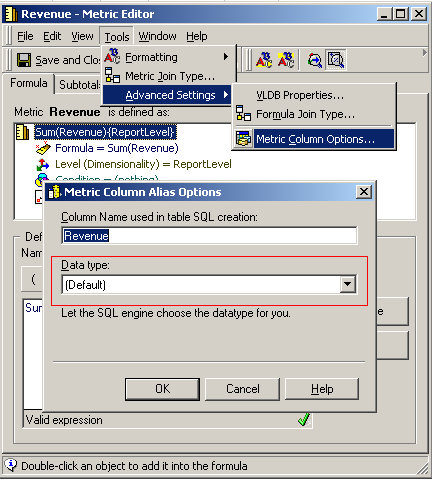
If the user wants to force a data type for any particular metric the change should be done at the metric level, as shown below. If no previous change was done, the "Default" option will be selected, which means Strategy will decide the data type to be used.