Attributes Child Candidates are chosen by taking all the attributes that share a source table with the attribute in question and subtracting the attribute in questions existing relationships (i.e. Existing Children/Parents.)
For example, notice the Order attribute in Strategy Tutorial which has the following children candidates:
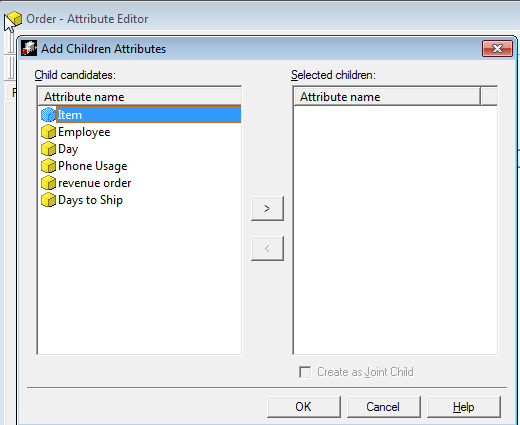
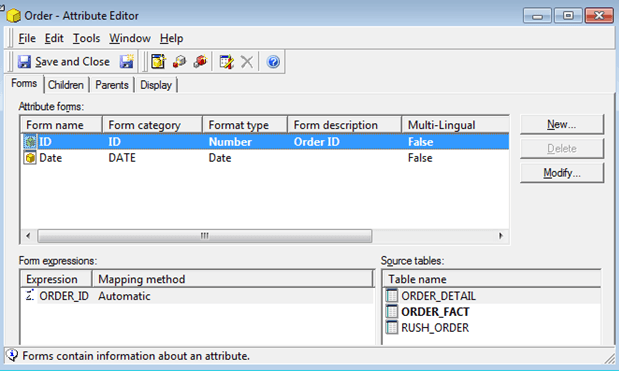
These Child candidates are coming from the three source tables the Order Attribute is using (ORDER_DETAIL, ORDER_FACT, AND RUSH_ORDER):
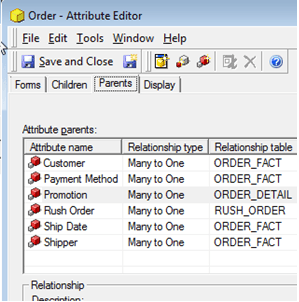
The Order attribute currently has the following relationships (i.e. the relationships that will be excluded as Child Candidates from the attributes which share a source table with the Order attribute.)
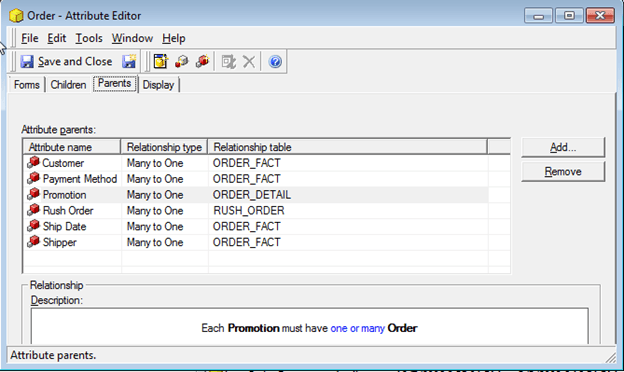
Note: Order has no children in this example.
ORDER_DETAIL has the following attributes in common with the Order attributes current relationships:
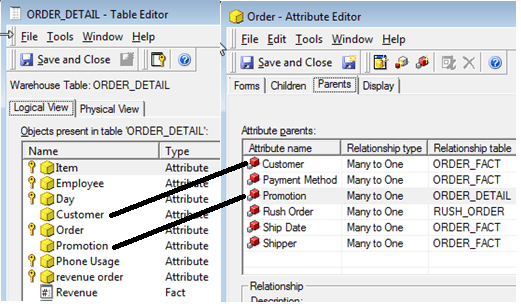
This means that Customer and Promotion are excluded as possible Children of the Order attribute. Item, Employee, Day, Phone Usage, Rush order, and Revenue Order now remain as child candidates.
ORDER_FACT has the following attributes in common with the Order attributes current relationships:
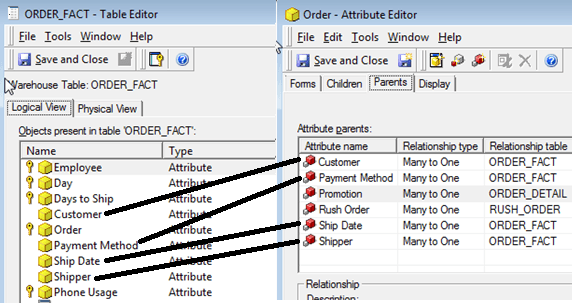
This means that Customer, Payment method, Ship Date, and Shipper are excluded as possible Children of the Order attribute. Item, Employee, Day, Phone Usage, and Revenue Order, and Rush Order now remain as child candidates.
RUSH_ORDER has the following attributes in common with the Order attributes current relationships:
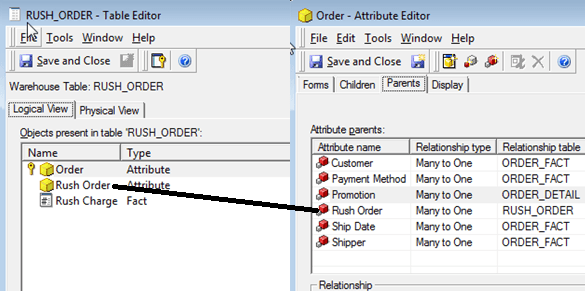
This means that Rush Order is excluded as possible Children of the Order attribute. Item, Employee, Day, Phone Usage, and Revenue Order now remain as child candidates.
Notice that these attributes (the remainging attributes above) are the child candidates of the Order attribute.