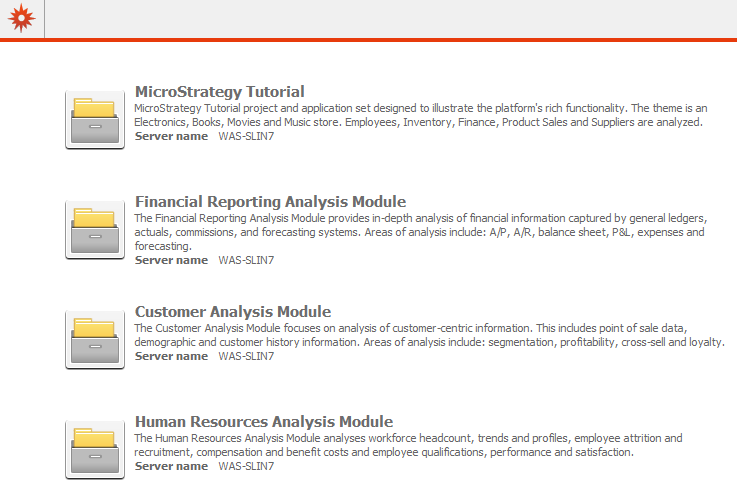
Before Customization:
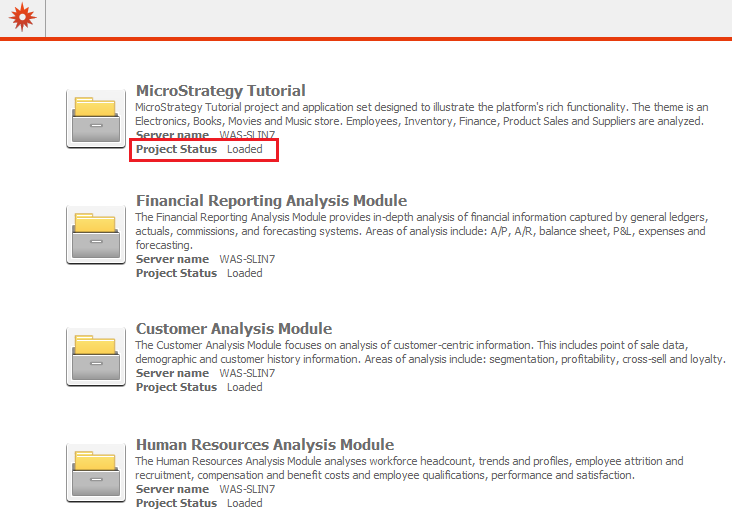
After Customization:
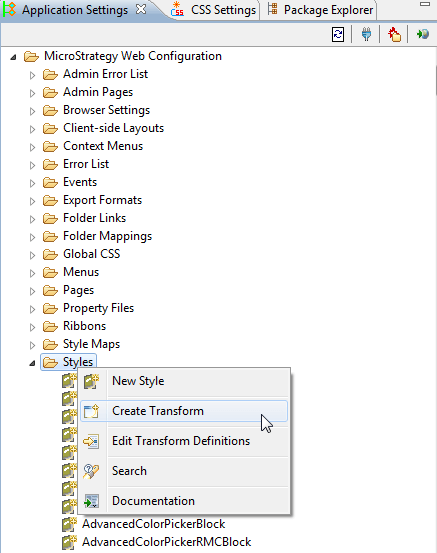
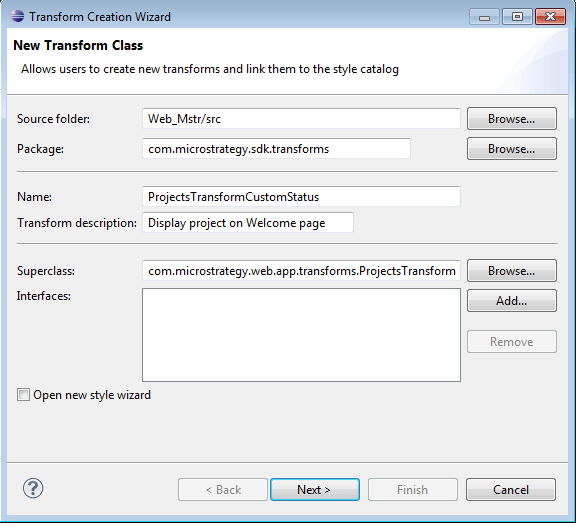
public void renderProjectStatus(MarkupOutput markupoutput, ProjectInformation projectinformation)  {
	ProjectInformation p = projectinformation;
	if (p != null)   {
		int status = projectinformation.getProjectStatus();
		String strStatus = "";
		String label = "Project Status";

		switch (status){
			case EnumDSSXMLProjectStatus.DssXmlProjectStatusActive:
				strStatus = "Loaded";
				break;
			case EnumDSSXMLProjectStatus.DssXmlProjectStatusErrorState:
				strStatus = "Error State";
				break;
			case EnumDSSXMLProjectStatus.DssXmlProjectStatusExecIdle:
				strStatus = "Execution Idle";
				break;
			case EnumDSSXMLProjectStatus.DssXmlProjectStatusFullIdle:
				strStatus = "Full Idle";
				break;
			case EnumDSSXMLProjectStatus.DssXmlProjectStatusOffline:
				strStatus = "Offline";
				break;
			case EnumDSSXMLProjectStatus.DssXmlProjectStatusRequestIdle:
				strStatus = "Request Idle";
				break;
			case EnumDSSXMLProjectStatus.DssXmlProjectStatusWHExecIdle:
				strStatus = "Warehouse Execution Idle";
				break;
			default:
				strStatus = "Loaded";
				break;
		}
		Tag tag = getTagsFactory().newTag("label");
		tag.addTextChild(label);
		tag.render(markupoutput);

		Tag tag1 = getTagsFactory().newTag("span");
		tag1.addTextChild(strStatus);
		tag1.render(markupoutput);
	}
}<div class="server"> <mstrlayout:render name="ProjectStatus"> <mstrlayout:argument list="project" type="com.Strategy.web.app.ProjectInformation"/> </mstrlayout:render> </div>
The example provided in this document is provided “as-is” to the user and assumes that the user:
PREREQUISITES:
For the sample to work, the Strategy Web JAR files must be accessible by the Java Runtime
Environment. The Strategy Web JAR files can be found under:
Note:
More elaborate programs will require additional library files and are out of the scope of this document.
ADDITIONAL INFORMATION:
The Strategy SDK allows you to customize the standard Strategy Web interface, and extend and integrate the Strategy business intelligence functionality into other applications. However, before changing the way Strategy Web products look or behave, it is helpful to understand how the application is built. For more information regarding the Strategy Web architecture or the process of customizing Strategy Web, please refer to Strategy Developer Zone (https://resource.microstrategy.com/msdz/).
To access the Strategy Developer Zone, you must have access to the Strategy Knowledge Base, you must have purchased the Strategy SDK, and you must be current on your Strategy maintenance agreement. If you are a US-based business and believe that you satisfy all three of these conditions but you do not have access to the Strategy Developer Zone, please contact Strategy Technical Support at support@microstrategy.com or at (703) 848-8700. If you are an international business, please contact Strategy Technical Support at the appropriate email address or phone number found at http://www.microstrategy.com/Support/ContactUs.asp.
CUSTOMIZATION WARNING:
This customization is provided as a convenience to Strategy users and is only directly applicable to the version stated. While this code may apply to other releases directly, Strategy Technical Support makes no guarantees that the code provided will apply to any future or previous builds. In the event of a code change in future builds, Strategy Technical Support makes no guarantee that an updated version of this particular customization will be provided. In the event of a code change in future builds, Strategy may not be able to provide additional code on this matter even though this customization is provided at this time for this specific build. For enhancements to this customization or to incorporate similar functionality into other versions, contact your Account Executive to inquire about Strategy Consulting assistance.
