There are no restrictions on the names for the columns used in the expressions of a given attribute form. Heterogeneous mapping allows the engine to perform joins on unlike column names. If the user defines more than one expression for a given form, heterogeneous mapping will automatically take place when tables and column names require it.
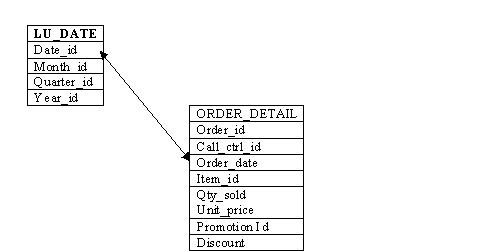
For example, because different source systems store Date information in various contexts, a data warehouse may have multiple columns in different tables which all represent the concept of 'Date'. The ID form of the attribute 'Date' may contain two expressions. The DATE_ID column occurs in the LU_DATE table as well as in two other tables. The elements in these columns correspond to elements in the ORDER_DATE column in the order_detail and ORDER_FACT tables.
Heterogeneous Mapping of Attribute Forms.
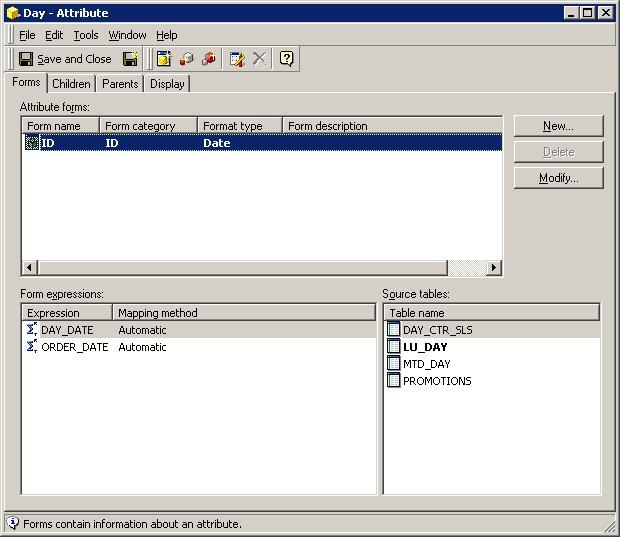
Each expression is linked to a set of source tables which contain the columns used in the expression. Of the tables in which the columns exist, a user may select any number which can used as a part of the attribute's definition. Users can view these chosen tables in the Source Tables area in the lower right corner of the Attribute Editor, as shown in the following screen shot:
Note that the data types of columns used as heterogeneous mappings for a given attribute must be identical or similar enough for every particular Relational Database Management System (RDBMS) to join them properly.
