EducationSoftwareStrategy.com
StrategyCommunity

Knowledge Base

Product

Community

Knowledge Base

TopicsBrowse ArticlesDeveloper Zone

Product

Download SoftwareProduct DocumentationSecurity Hub

Education

Tutorial VideosSolution GalleryEducation courses

Community

GuidelinesGrandmastersEvents
x_social-icon_white.svglinkedin_social-icon_white.svg
Strategy logoCommunity

© Strategy Inc. All Rights Reserved.

LegalTerms of UsePrivacy Policy
  1. Home
  2. Topics

Schema Objects Homepage


Stefan Zepeda

Salesforce Solutions Architect • Strategy


The most fundamental objects stored in the metadata are schema objects, the bridge between MicroStrategy reporting environment and data warehouse.

The Strategy metadata contains all the information needed for a Strategy project to function, including data warehouse connection information, project settings and Strategy object definitions. The most fundamental objects stored in the metadata are schema objects. Schema objects are logical objects that relate application objects to data warehouse content. They are the bridge between Strategy reporting environment and data warehouse. 
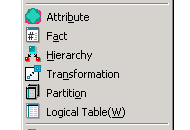
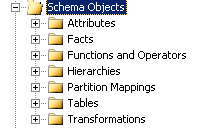
Creating schema objects is the primary task in Strategy Architect. The following basic schema objects form the foundation of a Strategy Project:
 

ka02R000000kX9IQAU_0EM440000002IRL.png


ka02R000000kX9IQAU_0EM440000002IRQ.png


  • Table - Logical objects that correspond to physical tables stored in the data warehouse. 
  • Fact - Logical objects that relate aggregatable data stored in the data warehouse to the Strategy reporting environment. They are usually numeric, and can be aggregated to different levels, depending on the reporting needs.
  • Attribute - Logical objects that relate descriptive (non-fact) data stored in the data warehouse to the Strategy reporting environment. They provide context for reporting on facts and define the level of detail at which facts are analyzed.
  • Hierarchy - Logical objects that group attributes to reflect their relationships or provide convenient browsing and drilling paths in the Strategy reporting environment.
  • Transformation - Logical objects used to compare values at different times. For example, this year versus last year or date versus month to date.  Transformations are useful for discovering and analyzing time-based trends.
  • Partition - Logical objects used to divide a larger table into smaller tables to improve query performance. They can reduce the number of records that queries must scan to retrieve a result set, and decrease the amount of time necessary to load data into data warehouse tables.

Comment

0 comments

Details

Knowledge Article

Published:

April 7, 2017

Last Updated:

April 7, 2017