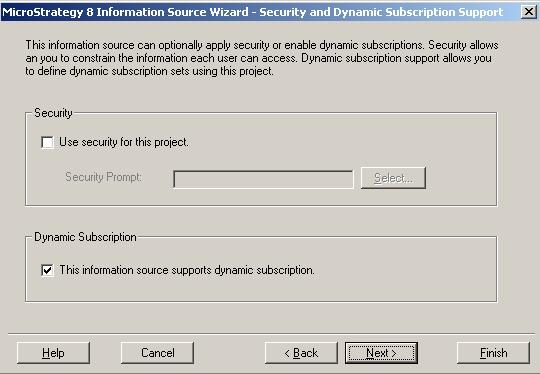
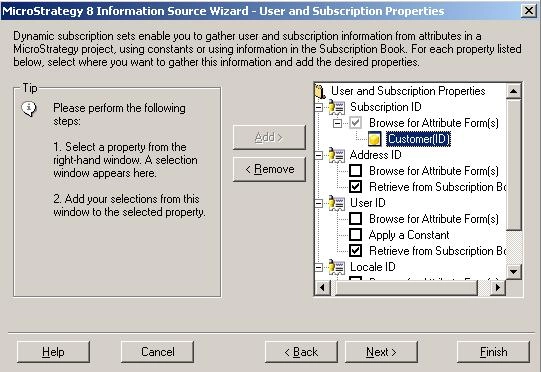
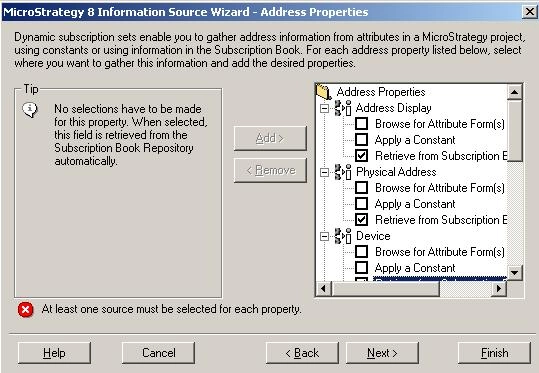
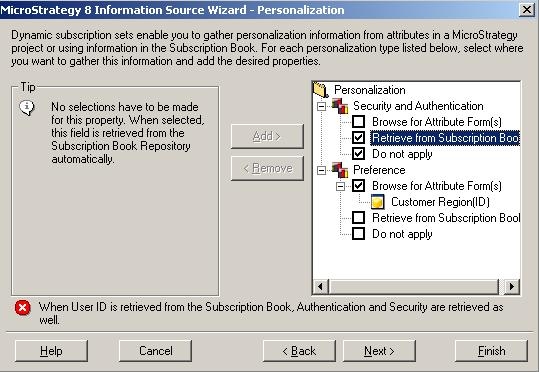
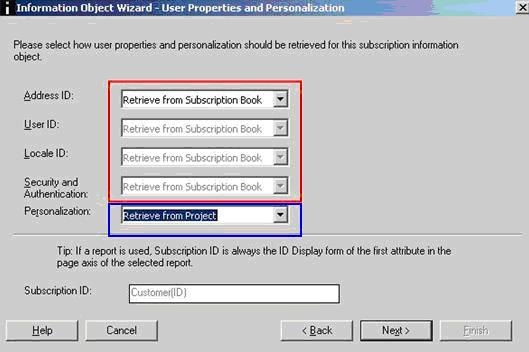
It is common for the majority, if not all, of the user information to be stored in the Subscription Book Repository. This information includes, but is not limited to:
There may come a point where it is desirable to utilize a dynamic subscription set to provide a means of chosing which users will receive a particular service at run-time. In such a situation it is likely that the Strategy Narrowcast Server 9.x - 10.x administrator will not want to duplicate all of the user information that is stored in the Subscription Book Repository into the data warehouse.
This technical note will walk through the basic steps that are necessary to leverage the existing user information stored in the Subscription Book Repository while utilizing a dynamic subscription set for run-time decisions for service execution.
For preliminary information regarding the requirements for dynamic subscription services, refer to the following Strategy Knowledge Base articles:
For information about setting up dynamic subscription services for use with Personalized Report Execution documents, refer to the following Strategy Knowledge Base articles:
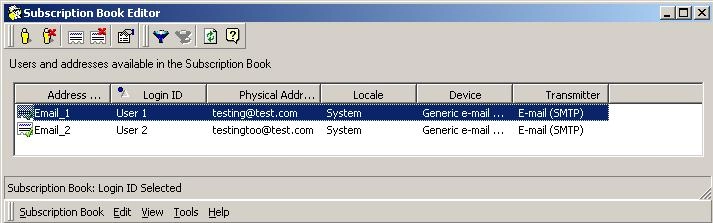
For simplicity, this technical note will only consider a scenario where an email delivery needs to be made to the two users, it will be trivial to scale the number of users to adjust for file delivery. The following image shows the two users as seen in the Subscription Book Editor:
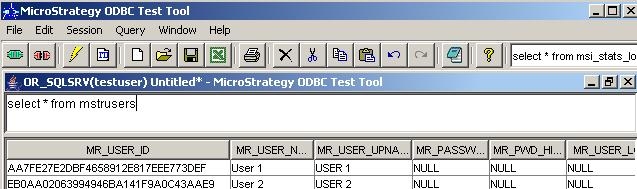
A. Obtain the Subscription IDs for the users from the Subscription Book Repository:
SELECT * FROM <prefix>MSTRUSERS
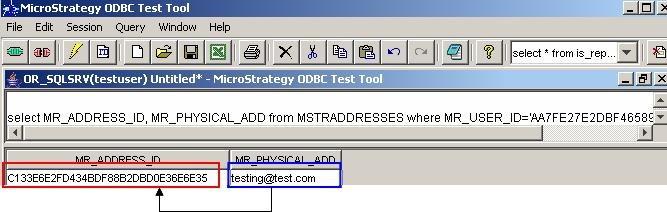
SELECT MR_ADDRESS_ID, MR_PHYSICAL_ADD FROM <prefix>MSTRADDRESSES WHERE MR_USER_ID ='MR_USER_ID for a user obtained from Step 2'
SELECT MAX(MR_SUB_ID) FROM <prefix>MSTRSUBSCRIPTIONS WHERE MR_USER_ID=`User ID from 3A` AND MR_ADDRESS_ID ='Address ID from 3B'
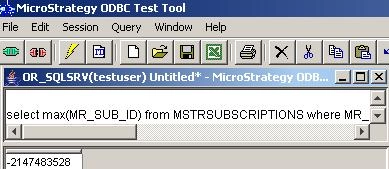
B. Create the subscriptions table:
Since all of the information, except for the personalization preference, is obtained from the Subscription Book Repository, the subscriptions table will only need two columns - one for the Subscription ID and one for the personalization preference. Depending on the complexity of the dynamic subscription set and the intended scale it is possible that this table will have more columns, however it must have at least these two.
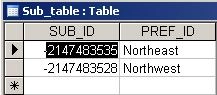
C. Create the attributes for the dynamic subscription set in Strategy Developer:
The attributes for the Subscription ID and personalization preference should be created in the metadata. This should be accomplished by using Strategy Developer 9.x - 10.x as outlined in the following Strategy Knowledge Base article:
KB12127 - How to create a dynamic report execution service in Strategy Narrowcast Server 9.x
D. Configure and create dynamic subscription set objects on Strategy Narrowcast Server 9.x - 10.x Administrator: